
Motion graphics
Keyframes
Use keyframes in Oraphim with a production-safe workflow, practical example, verification steps, and common failure checks.
Updated August 28, 2026Keyframes
Use keyframes inside a composition, where layers, timing, the viewer, the Inspector, and procedural processing remain connected.
Visual reference
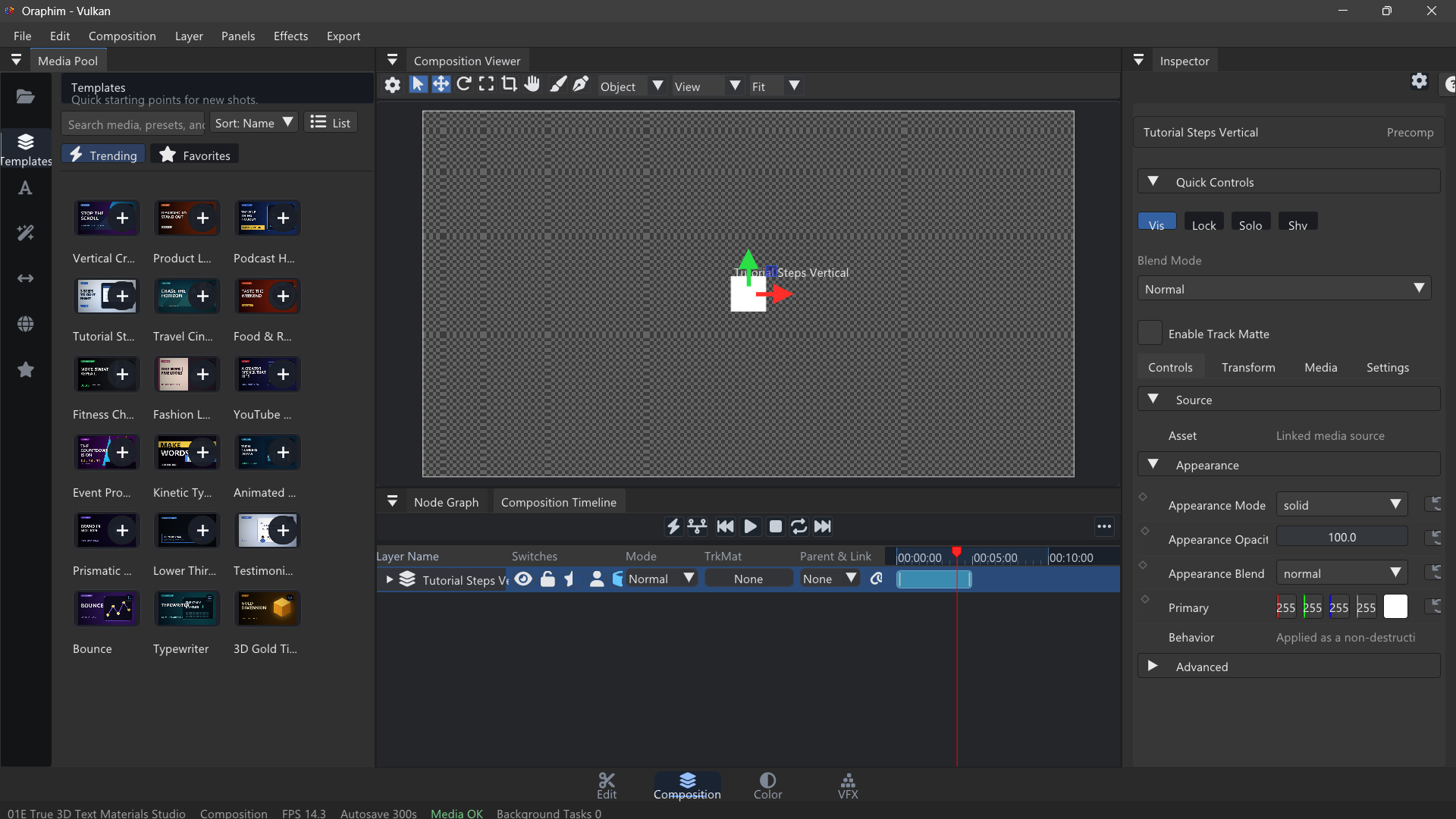
Space keyframes by the motion you want to perceive, not by arbitrary frame intervals.
Workflow
- Open or create a composition that matches the intended delivery.
- Add and name the required layers or nodes.
- Select the item you want to edit and expose its controls in the Inspector.
- Set the static appearance before adding keyframes or procedural behavior.
- Preview the complete duration and inspect important frames closely.
- Reuse the composition in Edit or render a review.
Example
Build one clear visual result with the feature—such as an animated title, a masked treatment, or a reusable graphic—before combining it with other effects.
Verify the result
Confirm layer order, timing, transparency, motion, and viewer output. Save, reopen, and check that the setup persists.
Use Keyframes in a production project
- Open Composition workspace and select the intended text, shape, layer, animation property, or procedural system.
- Establish the correct input state first—timing, media link, layer/node enable state, project settings, or source selection as relevant.
- Apply or adjust Keyframes with one clear goal. Change the smallest set of controls needed to reach that goal so the result remains understandable and reversible.
- Review the complete affected range in context. Scrub difficult frames and also play at normal speed when motion or audio is involved.
- Save a named milestone before moving into another major operation, especially after graph changes, tracking, AI processing, relinking, simulation, or delivery setup.
Practical guidance
Keyframes define property values at specific times. Start with meaningful poses, then shape interpolation in the curve editor; too many keyframes make revisions harder and motion less coherent.
A useful test is a short 5–10 second section containing both an easy case and a difficult case for this feature. Tune against the difficult moment without breaking the easy one. If two approaches are plausible, duplicate/version the project state and compare them rather than stacking both together blindly.
Verify the result
- Preview the full animation and compare the rendered output with the interactive viewer.
- Toggle/bypass the operation where possible and make sure the change you intended is actually responsible for the result.
- Check selection, visibility/mute/solo state, node connections, track locks, range, and source identity when the result appears missing.
- Save and reopen before treating a complex setup as reusable.
- If this feature changes final pixels or audio, render a short review and inspect the file outside Oraphim.