
Workspaces
Color workspace
Use color workspace in Oraphim with a production-safe workflow, practical example, verification steps, and common failure checks.
Updated August 27, 2026Color workspace
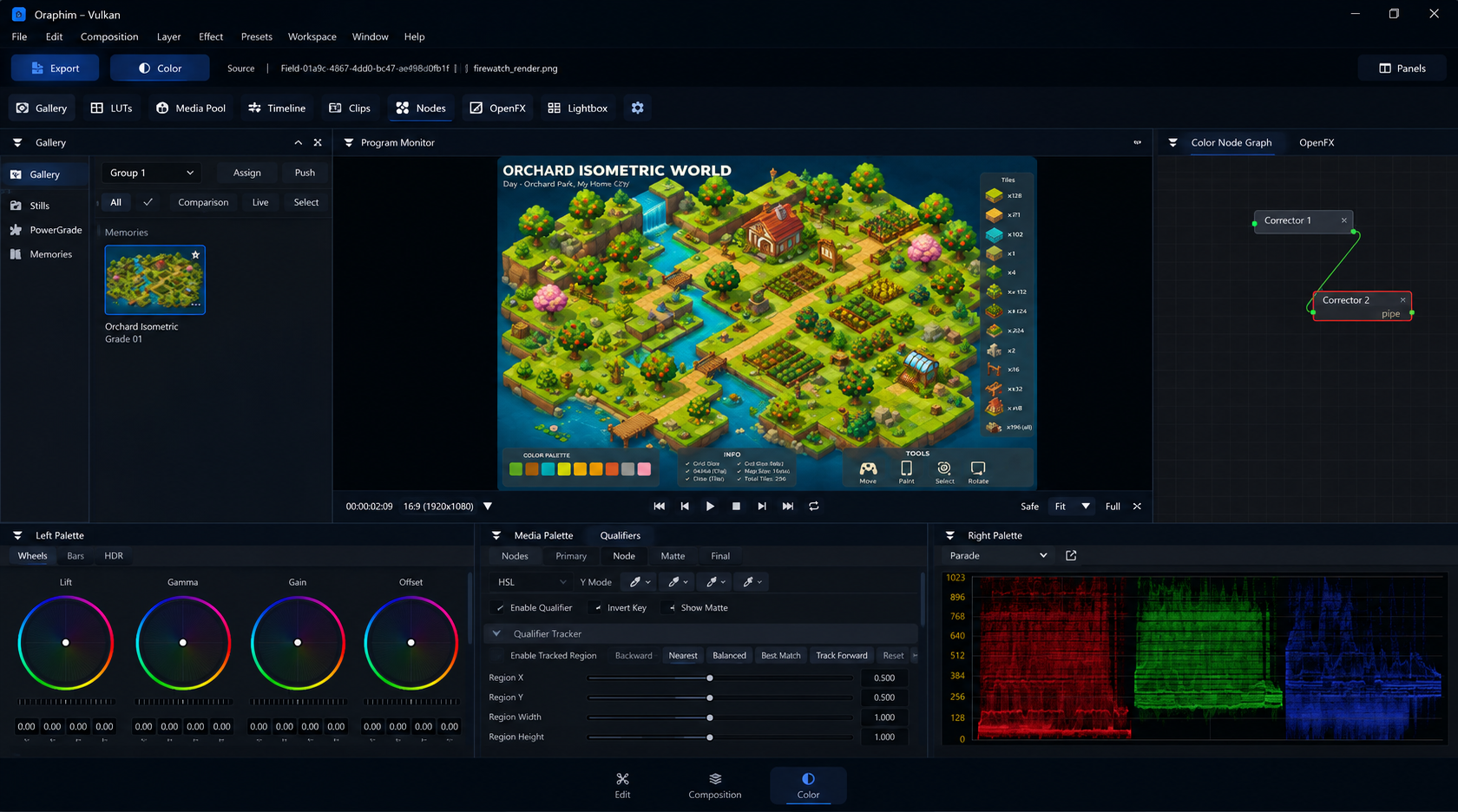
Start with the correct source
Choose the timeline, clip, composition, or media source you intend to grade. A technically correct grade on the wrong source is still wrong.
Reliable grading order
- Inspect exposure and channel balance with scopes.
- Correct white balance and overall exposure with primary controls.
- Set contrast and saturation conservatively.
- Add serial nodes for separate operations rather than forcing every decision into one node.
- Use qualifiers or windows only when a correction should be isolated.
- Track a window when the subject moves.
- Compare before and after, then review several representative shots at normal playback speed.
Avoid display-only decisions
The viewer is essential, but scopes reveal clipped channels, crushed shadows, and color casts that a bright or uncalibrated monitor can hide.
Use Color workspace in a production project
- Open named Oraphim workspace and select the intended resource that workspace operates on.
- Establish the correct input state first—timing, media link, layer/node enable state, project settings, or source selection as relevant.
- Apply or adjust Color workspace with one clear goal. Change the smallest set of controls needed to reach that goal so the result remains understandable and reversible.
- Review the complete affected range in context. Scrub difficult frames and also play at normal speed when motion or audio is involved.
- Save a named milestone before moving into another major operation, especially after graph changes, tracking, AI processing, relinking, simulation, or delivery setup.
Practical guidance
Use color workspace only where it solves a defined creative or technical problem, and compare the result against the untreated state.
A useful test is a short 5–10 second section containing both an easy case and a difficult case for this feature. Tune against the difficult moment without breaking the easy one. If two approaches are plausible, duplicate/version the project state and compare them rather than stacking both together blindly.
Verify the result
- Switch away and back, confirm selection/state persistence, and validate the result in preview or export.
- Toggle/bypass the operation where possible and make sure the change you intended is actually responsible for the result.
- Check selection, visibility/mute/solo state, node connections, track locks, range, and source identity when the result appears missing.
- Save and reopen before treating a complex setup as reusable.
- If this feature changes final pixels or audio, render a short review and inspect the file outside Oraphim.